Exploring the Traditional Techniques of Knitting and Weaving Fabrics

In today’s fast-paced world of mass-produced fabrics, the art of traditional knitting and weaving techniques may seem like a thing of the past. However, these ancient methods of creating fabrics are still practiced and preserved by artisans around the world. From delicate lace to durable wool blankets, the range of fabrics that can be created through knitting and weaving is truly remarkable. In this article, we will take a closer look at the traditional techniques used to craft these beautiful and timeless textiles.
The History of Knitting and Weaving
Knitting and weaving have been used to create textiles for centuries, with evidence of these techniques dating back to ancient civilizations such as the Egyptians, Greeks, and Romans. However, it was not until the Middle Ages that knitting and weaving truly flourished and became popular crafts. During this time, specialized guilds were formed, and techniques were honed and passed down from generation to generation.
While both knitting and weaving involve the interlacing of fibers, they differ in their methods and the final result. Knitting is created by using a series of interlocking loops, while weaving requires the use of a loom to interlace the fibers in a criss-cross pattern. Both techniques allow for the creation of a wide variety of fabrics, each with its own unique characteristics.
The Traditional Techniques of Knitting
Hand Knitting
Hand knitting is the oldest form of knitting and is still used by many artisans today. This technique involves using two needles to create intricate patterns by looping and interlocking yarn. Hand-knitted fabrics are known for their softness and versatility, making them a popular choice for garments such as scarves, hats, and sweaters.
Machine Knitting
Machine knitting was introduced in the early 19th century and revolutionized the textile industry. Unlike hand knitting, which can be a time-consuming process, machine knitting allows for the quick production of large quantities of fabrics. This technique is often used for creating items such as socks, gloves, and even entire garments.
Lace Knitting
Lace knitting is a delicate and intricate form of knitting that produces a fabric with an open, lace-like appearance. It requires a high level of skill and is often used to create decorative fabrics such as shawls, doilies, and even wedding gowns.
The Traditional Techniques of Weaving
Hand Weaving
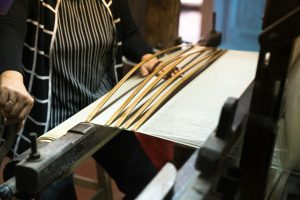
Hand weaving is one of the oldest forms of weaving and is still practiced by skilled artisans around the world. This technique involves interlacing threads on a loom to create a solid, durable fabric. Hand-woven fabrics can range from simple patterns to intricate designs, and are commonly used for items such as blankets, towels, and clothing.
Power Loom Weaving
Power loom weaving was developed in the late 18th century and quickly became the preferred method for mass-producing fabrics. This technique uses a mechanized loom to create fabrics with a consistent and uniform weave. Power loom weaving allows for faster production and can produce a wide variety of fabrics, making it ideal for the textile industry.
Tapestry Weaving
Tapestry weaving is a form of weaving that uses a special loom to create intricate designs and patterns. Unlike other forms of weaving, the warp and weft threads are both visible in the final fabric, giving it a unique and textured appearance. Tapestry weaving has a long history and is often used to create decorative wall hangings and rugs.
Preserving Traditional Techniques
In today’s mass-produced and fast-fashion culture, the art of traditional knitting and weaving techniques is in danger of being lost. However, there are still dedicated artists and organizations around the world working to preserve these ancient methods. From museums showcasing historic textiles to workshops teaching traditional techniques, efforts are being made to keep these skills alive and ensure their continuation for future generations.
In recent years, there has also been a growing trend towards sustainable and ethically-made products, with many consumers seeking out fabrics that are hand-crafted using traditional methods. This has led to a renewed interest in traditional knitting and weaving techniques and a greater appreciation for their beauty and craftsmanship.
In conclusion
Exploring the traditional techniques of knitting and weaving fabrics opens up a world of rich history, skill, and beauty. These techniques have stood the test of time and continue to be celebrated and practiced by artisans around the world. From the softest hand-knitted sweater to the intricate details of a hand-woven tapestry, these traditional fabrics are truly works of art that can be cherished for generations to come.